
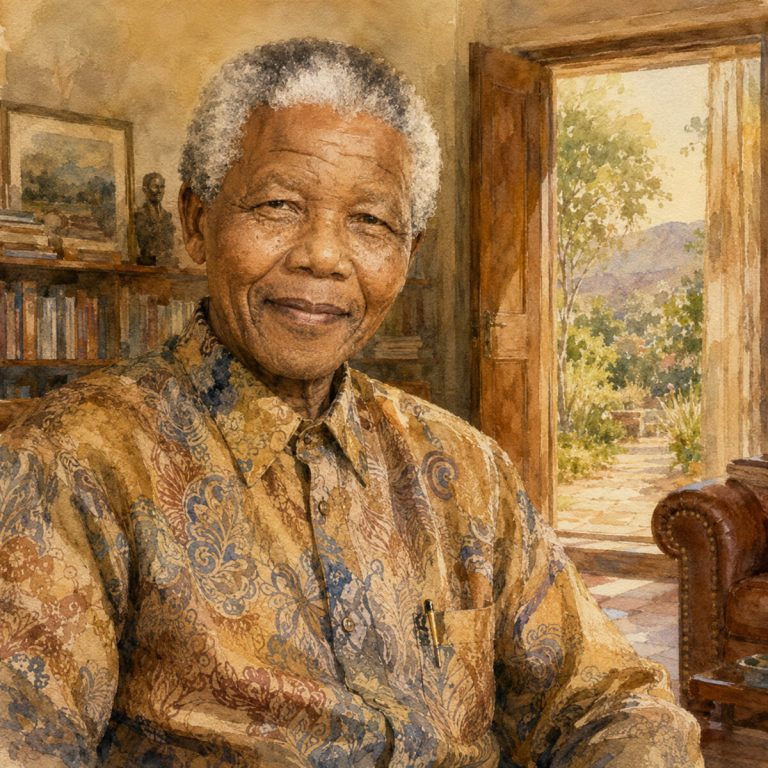
On 10 May 1994, Nelson Mandela became South Africa’s first democratically elected president. He was seventy-five and had spent twenty-seven years in prison. He had also become the indispensable symbol of a freedom struggle whose victory many feared would bring revenge or civil conflict.
Mandela’s authority came partly from what he endured and partly from his willingness to leave office. By serving one presidential term, he placed constitutional continuity above personal indispensability and demonstrated that leadership reaches its mature form when departure strengthens the institution.
His gift was not a magical ability to remove conflict. It was the capacity to hold a clear destination while remaining flexible about the route. A mature account must also retain the unfinished parts of the settlement: Mandela helped prevent revenge from becoming the foundation of the new state, while profound inequality and incomplete accountability remained.
Leaving allowed a younger leader to assume full responsibility. It reduced the chance that gratitude would harden into personal rule and showed that the presidency could change hands through constitutional process. A celebrated name can attract trust and resources, yet it can also stop an institution from developing legitimacy of its own.
The founder’s final responsibility is therefore not to provide a quotation for every later difficulty. It is to build a system in which later leaders can face difficulties using authority that is genuinely theirs.