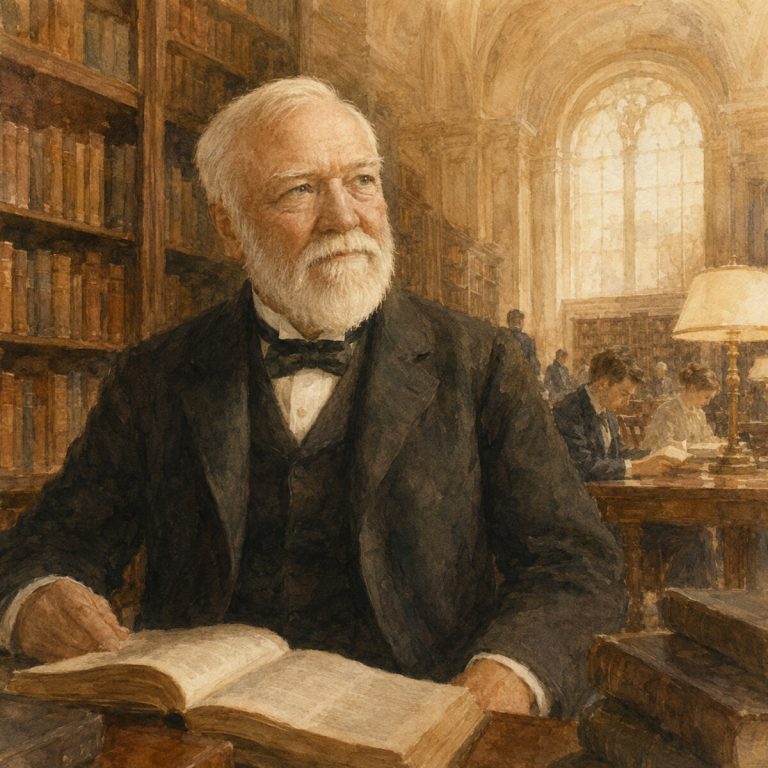
In 1881, Andrew Carnegie offered his birthplace of Dunfermline a free public library. The gift carried a condition. The town had to provide the site and continue supporting the institution. Carnegie would fund the building; the community had to make the library its own.
Carnegie believed great fortunes should be returned during the owner’s lifetime through institutions that helped people improve themselves. His libraries created ladders of capability. The labour conflict behind his wealth leaves a harder question about whether philanthropy can answer for the conditions that made generosity possible.
Calling oneself a trustee is meaningful only when the word imposes duties: listening, transparency, competence and a willingness to examine how wealth was created. A philosophy about using wealth for humanity cannot be assessed independently of responsibility for the enterprise producing it.
The same design question appears in families. Giving a child an asset without the knowledge and resources required to own it is incomplete. The purpose of a transfer is not to finish the donor’s act. It is to make responsible ownership possible.
Founders who prevent adaptation leave instructions that become obsolete. Those who provide no governing principle leave capital vulnerable to drift. Stewardship requires enough direction to preserve identity and enough discretion to preserve relevance.