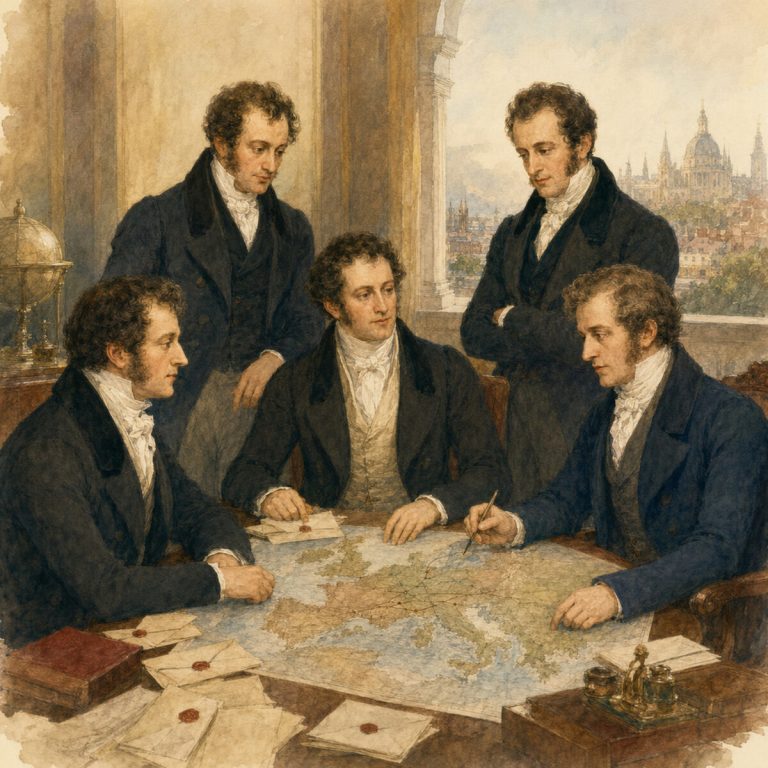
In 1810, Mayer Amschel Rothschild formalised a partnership with his sons. Within a generation, five brothers were operating from Frankfurt, London, Paris, Vienna and Naples. Long before the modern multinational company or family office, the Rothschilds had created a family network capable of moving capital, information and trust across borders.
Their rise has attracted a vast body of antisemitic conspiracy, which must be rejected. The genuine governance lesson is more useful: trust can become economic infrastructure when shared identity is combined with capability, information and enforceable rules.
The structure resembled a federation more than a single headquarters. Local houses required discretion because conditions differed. Shared interests, correspondence and family agreements preserved coordination. The centre was a relationship and a set of obligations, rather than a person approving every act.
Each branch also traded partly on the reputation of the whole family. Trust accumulated in one centre could support activity in another; misconduct in one house could damage every house. The name functioned as shared collateral and created internal discipline.
Yet a system designed to preserve confidence within a family can become too closed. Kinship may support trust, but cannot substitute for skill, judgement or accountable conduct. The operating principle must survive even when the map, the people and the institutions change.