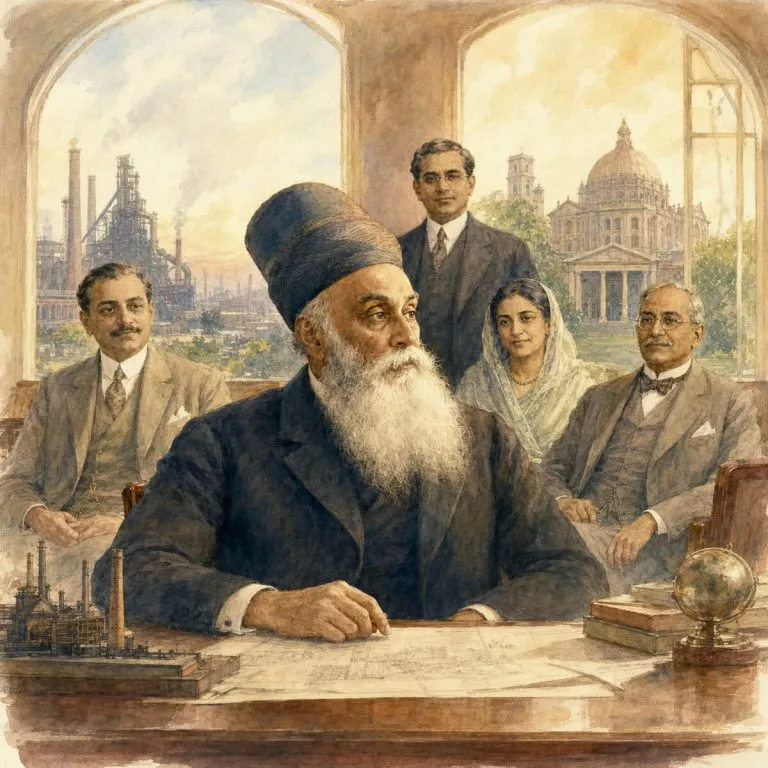
Philanthropic trusts hold about 66 per cent of the equity share capital of Tata Sons, the Tata group’s principal holding company. A significant part of the value created by its businesses therefore flows towards education, health, livelihoods, culture and public-purpose work. Philanthropy does not wait at the end of the corporate story. It sits inside the ownership structure.
This architecture grew from the convictions of the Tata family. It helped the group pursue industries connected to India’s development while creating institutions intended to serve society. The structure is often presented as proof that purpose and business naturally reinforce one another. The history is more demanding: a charitable owner still faces competition, capital allocation, leadership conflict and accountability.
Ownership gives the trusts an enduring economic interest and a voice in appointing and overseeing group leadership. It also protects against fragmentation. No widening circle of heirs must continually decide whether to sell the holding company or distribute its value.
Yet good intentions do not answer procedural questions. How is leadership evaluated? What information reaches trustees? How are minority shareholders protected? When may a long-term owner intervene? Purpose needs governance precisely because people can invoke the same values in support of different decisions.
The Tata achievement is not the absence of conflict. It is the presence of an owner that keeps asking commercial success whom it is ultimately intended to serve.