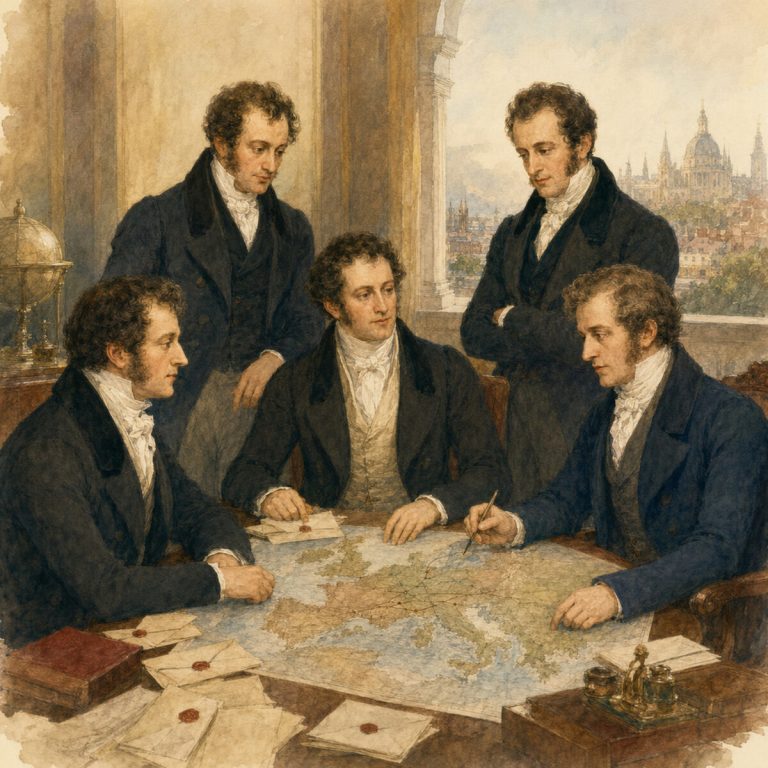
When Cornelius Vanderbilt died in 1877, almost the whole economic weight of the family sat in one place. The Commodore had built shipping lines, moved into railroads and consolidated power around the New York Central system. His fortune was among the largest ever assembled by an American.
The Vanderbilts inherited an immense fortune, a famous name and few institutions capable of giving either a common purpose. Their dispersal shows how wealth can disappear through fragmentation, consumption and weak preparation even when individual heirs remain talented, prominent and culturally influential.
As ownership spread and the railway economy changed, the centre weakened. Later generations received securities, trusts, houses and social position rather than one common enterprise requiring their service. Wealth became easier to experience as income and harder to experience as responsibility.
The mansions converted productive capital into costly identity. Some became museums or public institutions. Others were demolished because those who inherited them could no longer justify their cost. The buildings survived only where a new purpose could be found.
Responsibility cannot be transferred through a will alone. It is learned by reading accounts, observing boards, making bounded decisions and seeing the consequences of capital allocation. An heir protected from every meaningful choice may receive wealth without developing the capacity to own it.